
Santa Monica.
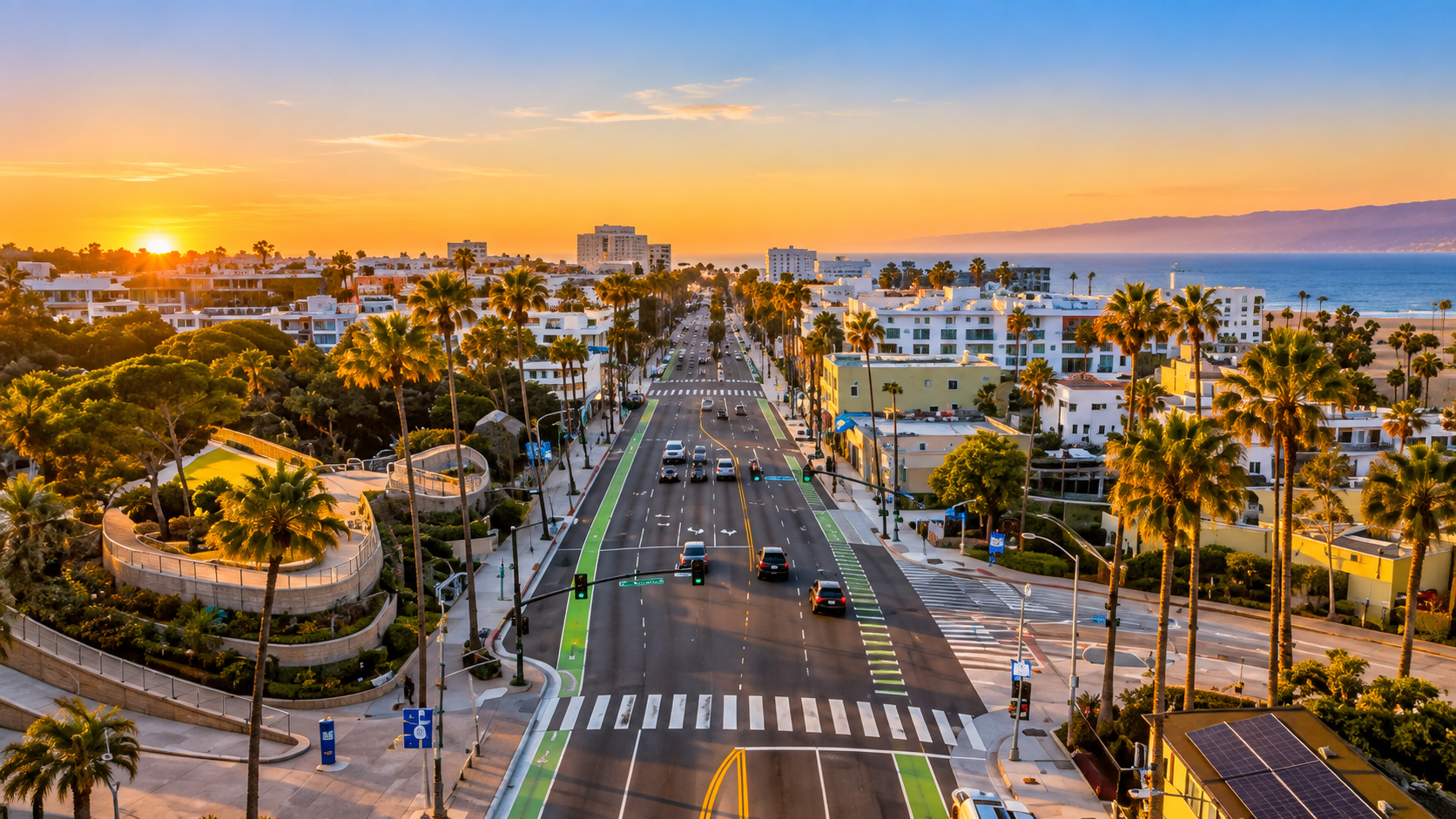
Oceanfront living, walkable commercial districts, established residential streets and one of Southern California’s most recognizable stretches of coastline.
Coastal Energy.
Neighborhood Rhythm.
Santa Monica combines the Pacific coastline with a compact city of distinct residential and commercial districts. Ocean Avenue and Downtown feel very different from the quieter streets north of Wilshire, the neighborhood character around Montana Avenue, or the more relaxed atmosphere near Main Street and Ocean Park.
Shopping, restaurants, parks, the beach and the Metro E Line are woven into daily life, while location within the city can significantly change a property’s setting, walkability and housing type.
Ocean. City.
Connected Living.
Beach, oceanfront recreation and the bluff define the city’s western edge.
Third Street Promenade, Santa Monica Place, dining and entertainment create a walkable urban center.
Montana Avenue, Ocean Park, North of Montana and other pockets each have a distinct residential feel.
Downtown Santa Monica is the western terminus of the E Line connecting toward Los Angeles.
Shopping. Dining.
Life by the Coast.
A Walkable Downtown Core.
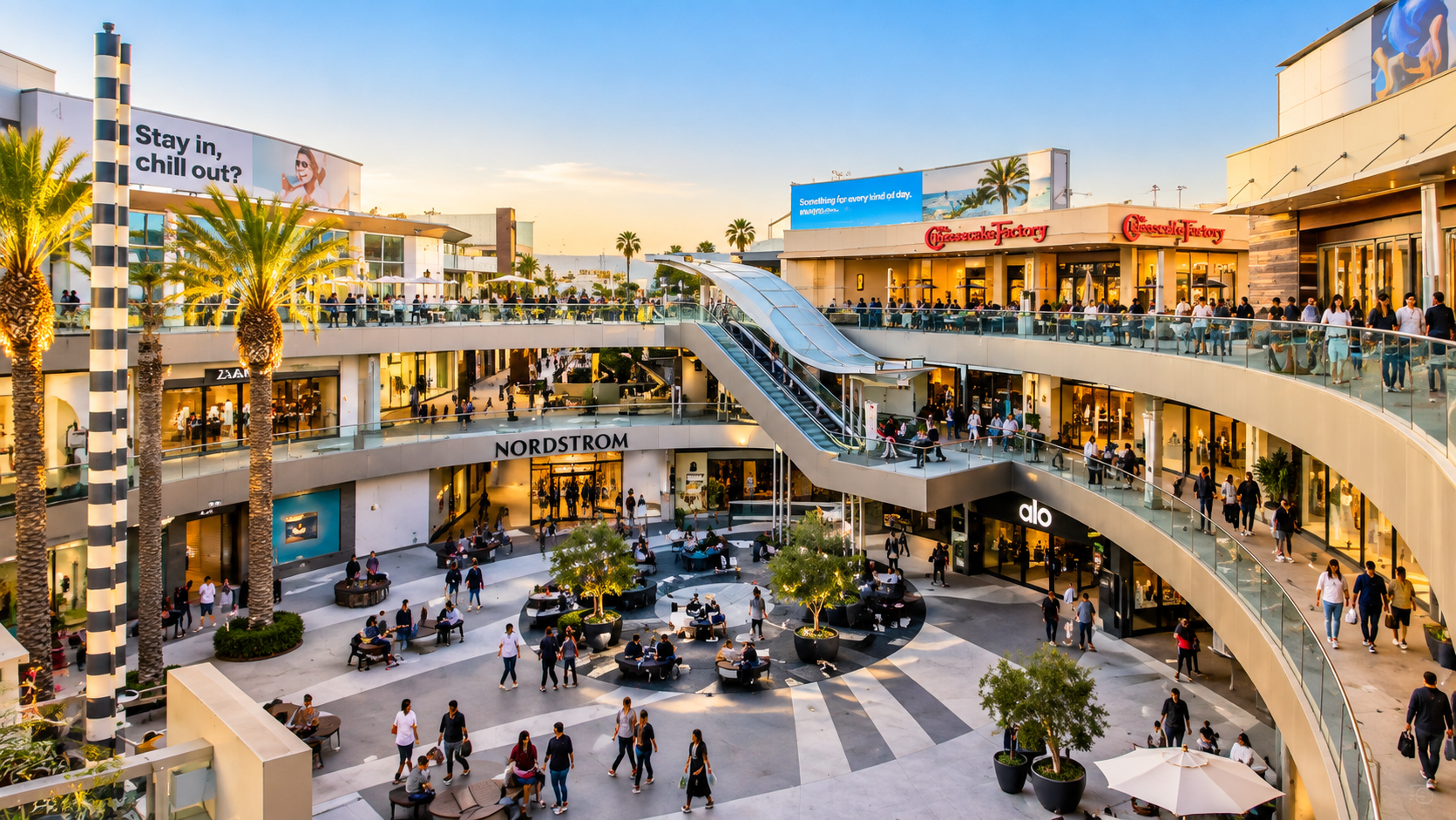
Downtown Santa Monica brings together the Third Street Promenade, Santa Monica Place, restaurants, shops, entertainment and access to the Pier. The Promenade’s pedestrian blocks give this part of the city a distinctly urban, social rhythm.
Understanding the
Local Options.
Santa Monica is served by the Santa Monica-Malibu Unified School District, with public elementary, middle and high-school options. The city also includes established independent and Catholic schools.
The guide below identifies what each option is rather than ranking schools. Public-school assignment and enrollment eligibility should always be checked for the individual property address.
SMMUSD Elementary Schools
Santa Monica public elementary options include Franklin, Grant, McKinley, Roosevelt and Will Rogers Learning Community, along with Edison Language Academy and Ocean Park School House programs within the district.
Explore SMMUSD Schools →Lincoln & John Adams
Lincoln Middle School and John Adams Middle School are SMMUSD public middle-school options in Santa Monica. Assignment depends on current district rules and the individual address.
Explore SMMUSD Schools →Santa Monica High School
Santa Monica High School, commonly known as Samohi, is the district’s comprehensive public high school in Santa Monica.
Explore SMMUSD Schools →Crossroads School
Crossroads School for Arts & Sciences is an independent K–12 school in Santa Monica with separate elementary, middle and upper-school divisions and its own admissions process.
Visit Crossroads →Saint Monica Preparatory
Saint Monica Preparatory provides a Catholic education through lower school grades K–5, middle school grades 6–8 and upper school grades 9–12.
Visit Saint Monica Prep →From Neighborhood Tables
to Rooftop Evenings.
Santa Monica’s dining scene changes by district. Downtown offers rooftops and destination restaurants, Wilshire has established neighborhood dining, and Montana Avenue and Main Street add cafés, boutiques and a more local street-level rhythm.
These are three different examples of the city’s dining personality — not a ranking.

Tar & Roses
A Santa Monica restaurant centered on globally inspired cooking and the wood-fired oven, with a dinner-focused neighborhood atmosphere.
Visit Restaurant →
Rustic Canyon
A neighborhood restaurant with a slow-food approach and a strong connection to seasonal Southern California ingredients and the Santa Monica Farmers’ Market.
Visit Restaurant →
Élephante
An open-air rooftop restaurant on 2nd Street with coastal Italian-inspired dining, cocktails and a setting influenced by the Southern Mediterranean.
Visit Restaurant →Downtown · Montana · Main Street
Downtown and Third Street Promenade bring together visitors, shoppers, diners and entertainment. Montana Avenue offers a tree-lined mix of boutiques, cafés and restaurants, while Main Street has a more relaxed neighborhood character close to the beach. Together they show why Santa Monica feels less like one commercial center and more like several distinct local districts.
A City Shaped
by the Coast.
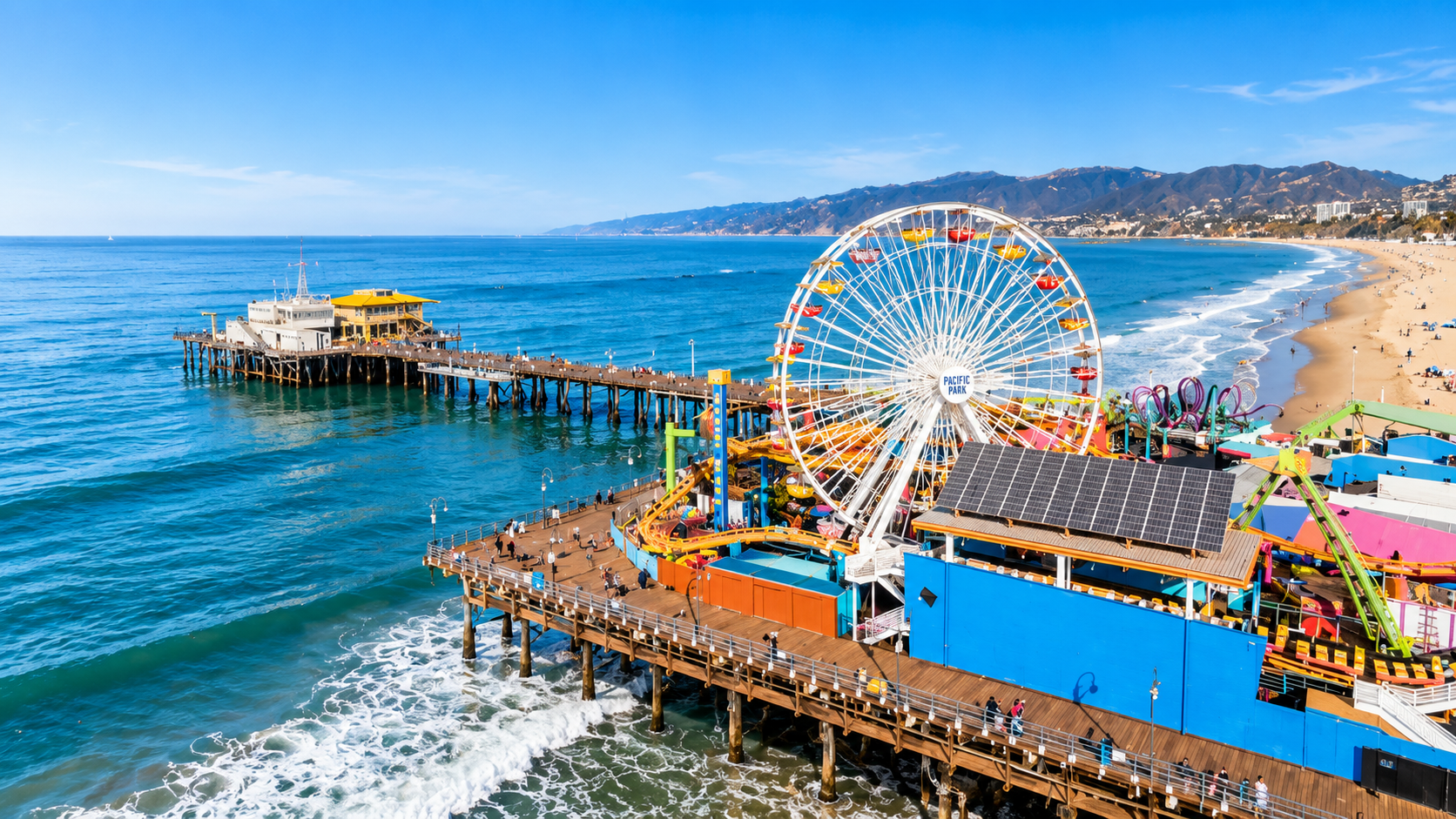
Santa Monica was founded in 1875, and its relationship with the Pacific has shaped the city’s identity ever since. The bluff, beach and oceanfront became defining public spaces as the city developed.
Palisades Park has roots in the city’s earliest years and was secured for public park use in the late nineteenth century. Downtown evolved repeatedly too: Third Street became a pedestrian mall in 1965, Santa Monica Place opened in 1980, and the renovated Third Street Promenade opened in 1989.
The Pacific.
Always in the Picture.
Santa Monica’s coastline is more than a landmark. The beach, Palisades Park, Ocean Avenue and the bluff create a continuous outdoor edge along the city.
The setting also means location matters: proximity to the beach, bluff, major streets and commercial districts can create very different day-to-day experiences within only a few blocks.
One City.
Many Micro-Markets.
Santa Monica contains a wide range of housing: condominiums near Downtown and major corridors, apartments and smaller residential buildings, traditional single-family streets, and larger homes in northern residential pockets.
For buyers and sellers, neighborhood, exact block, ocean proximity, lot, condition, parking, views and current competition can materially change how an individual property should be evaluated.
Walkability Meets Residential Pockets.
Some Santa Monica properties place restaurants, shopping and the beach within a compact radius; others sit on quieter residential streets. Understanding that trade-off is part of evaluating both lifestyle and value.
Single-Family Homes
Established residential areas offer homes ranging from traditional cottages and remodeled properties to larger residences on substantial lots.
Condos & Townhomes
Attached housing is an important part of Santa Monica’s market, particularly near Downtown, Wilshire and other commercial corridors.
Coastal & View Properties
Ocean proximity, bluff position, views and immediate surroundings can create distinct property segments within the broader Santa Monica market.
Santa Monica
Market Data.
Real estate conditions change. The live CRMLS chart below provides current Santa Monica market context without relying on a written statistic that may quickly become outdated.
Use the longer-term trend alongside current inventory, recent comparable sales and the characteristics of the individual property.
Median Sales Price · Santa Monica
Live CRMLS DataTurning Market Data Into Context.
Read Left to Right
The horizontal axis represents time and shows how the median has moved across the reporting periods displayed.
Read Bottom to Top
The vertical axis represents price. Higher points correspond with a higher median sales price for that reporting period.
Follow the Trend
Look across several periods rather than concentrating on a single month to understand broader market direction.
Understand the Midpoint
The median is the midpoint of the sales included in the data. It does not mean every Santa Monica property has the same value or moved by the same percentage.
A Graph Is Context — Not a Home Valuation.
Santa Monica contains multiple property types and micro-markets. A period with a different mix of condo, townhome or single-family closings can influence the median.
Recent comparable sales, exact location, property type, condition, lot, parking, views and current competition provide additional context when evaluating an individual home.
For buyers, the data helps place an asking price in context. For sellers, it provides a starting point before narrowing the analysis to the individual property.
Explore Santa Monica
Real Estate.
Explore current Santa Monica properties available through the MLS, then contact me when you’re ready to compare homes, recent sales and neighborhood-specific market context.
Considering Santa Monica?
Whether you’re buying, selling or simply trying to understand the Santa Monica market, I can help you evaluate the neighborhood, the property, the data and the strategy behind your next move.
Contact Monica →